ROUNDTABLE
BETWEEN
ARCHIVE
AND
EXHIBITION
In 2008 Okwui Enwezor identified “archive fever” as one of the key trends of contemporary art, which he elucidated through an eponymous exhibition at the International Center of Photography in New York. The archive’s importance as a topos for exhibition making has only increased since then, spurred on by the global expansion of contemporary art museums and biennale exhibitions; the continued growth of the internet as a readily accessible repository of information; and the emergence of new discourses for representing marginalized voices in institutional contexts. Yet the internet should not be mistaken for an actual archive, and physical archives are tightly controlled spaces that can be implicated in exclusionary social structures. Moreover, the discipline of history itself now struggles to keep up with the cycles of fake news and information overload that drive our networked media ecology. Do such social conditions require us to rethink the presumed affinities between the archive and the museum? What transformations does an object undergo on its way from an archive to an exhibition space?
The AWT Talks Roundtable 2026 invites three panelists to speak about the theme “Between Archive and Exhibition” through recent curatorial projects addressing different registers of individual, national, and transnational histories. Victoria Sung, a senior curator at the Berkeley Art Museum and Pacific Film Archive, organized a major retrospective in early 2026 of the Korean-born American interdisciplinary artist Theresa Hak Kyung Cha at BAMPFA, which is also home to Cha’s personal collection and archives. Katsuo Suzuki, the chief curator of the National Museum of Modern Art, Tokyo, and a team of colleagues conducted intensive research into how works of propaganda from early 20th-century Japan occupy an ambivalent status between art and document, the results of which they presented in 2025 in “Opening Documents, Weaving Memories: A Special Exhibition Featuring Works from the Museum Collection.” Keyna Eliason, in her role as the director of content and research for the Bienal das Amazônias and cocurator-at-large of the 36th Bienal de São Paulo (2025–26), has developed a curatorial practice focused on memory building in a region where the archive and the museum are historically tied to colonial regimes of extraction and erasure.
Following initial statements by the panelists, the floor will be opened to a group discussion on how curators work with and through the conditions of the archive in making exhibitions today. The roundtable will also touch on the possibilities for art practitioners to find new ways of activating archives in line with rapidly changing audience expectations and modes of engagement.
The AWT Talks Roundtable is organized by Andrew Maerkle and Yuko Shiomi for Art Week Tokyo in conjunction with the Keio University Art Center and Keio Museum Commons.
PANELISTS
KEYNA ELEISON
Director of Research and Content, Bienal das Amazônias, and Cocurator-at-Large, 36th Bienal de São Paulo
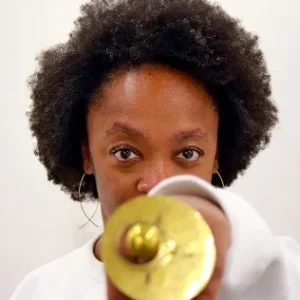
Photo by Murillo Tinoco
VICTORIA SUNG
Phyllis C. Wattis Senior Curator, Berkeley Art Museum and Pacific Film Archive
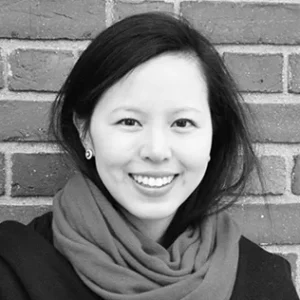
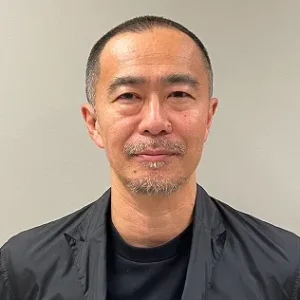
KATSUO SUZUKI
Chief Curator, National Museum of Modern Art, Tokyo
MODERATORS
The AWT Talks Roundtable is moderated by Andrew Maerkle, Editorial Director, Art Week Tokyo, and Aki Hoashi, Deputy Executive Director, Organizing Committee for Yokohama Triennale Office, and Manager, International Division & Curatorial Department, Yokohama Museum of Art.
ADMISSION
The AWT Talks Roundtable is a closed-door event for established curators and art administrators. All slots for international participants of this year’s roundtable have already been filled. If you are a curator or senior art administrator and are interested in attending a future edition of the roundtable, write to info@artweektokyo.com with the subject line “AWT Talks Roundtable” and a brief outline of your activities.