EXhiBition
AWT FOCUS
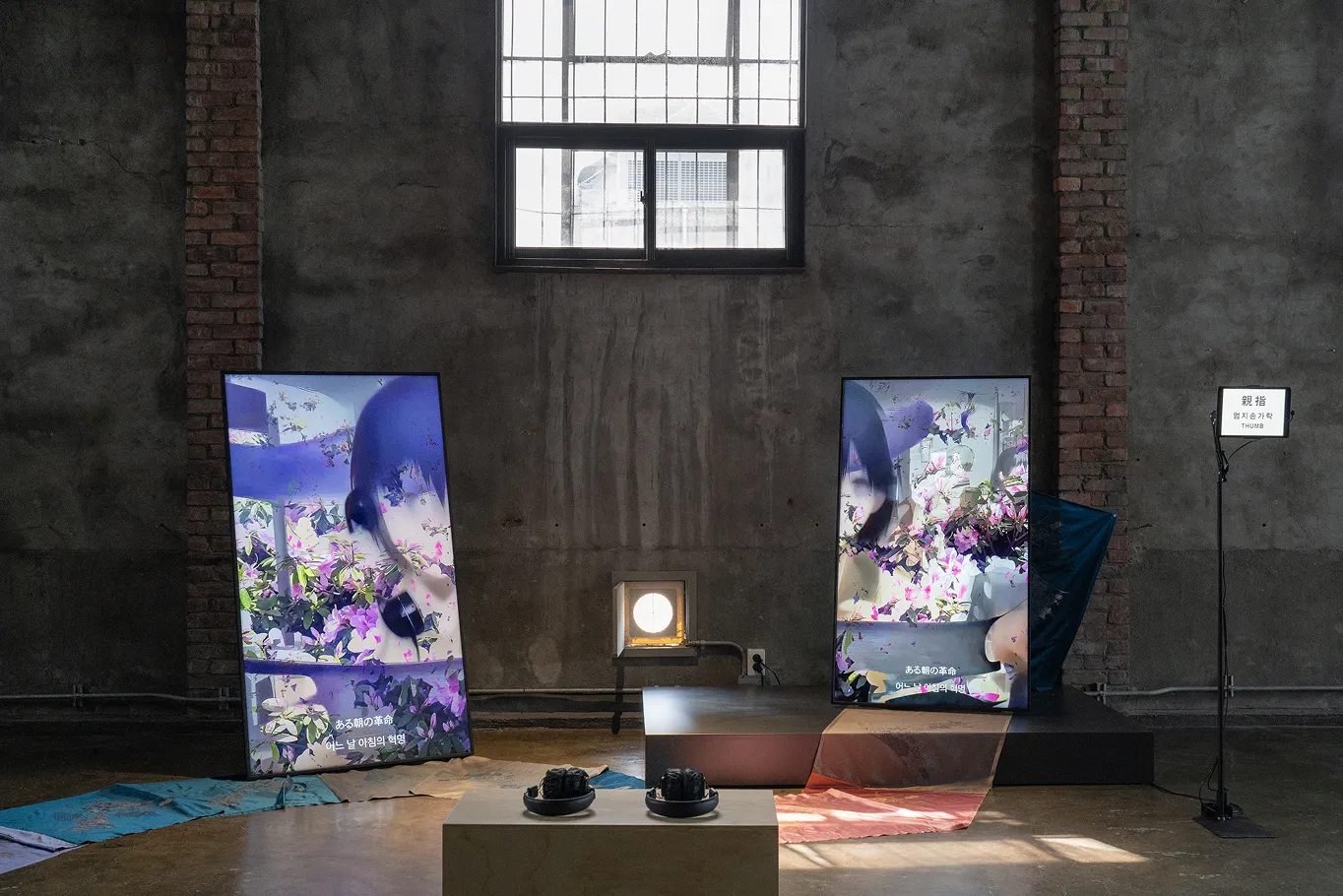
NATSUMI AOYAGI, Language for Our Relation: A Demonstration, 2025. 3-channel video (2 monitors and 1 tablet), color, sound, with dismantled wedding zabuton cushions, 4 min., 50 sec. Installation view, The WilloW, Seoul, 2025. Photo by Minji Yi.
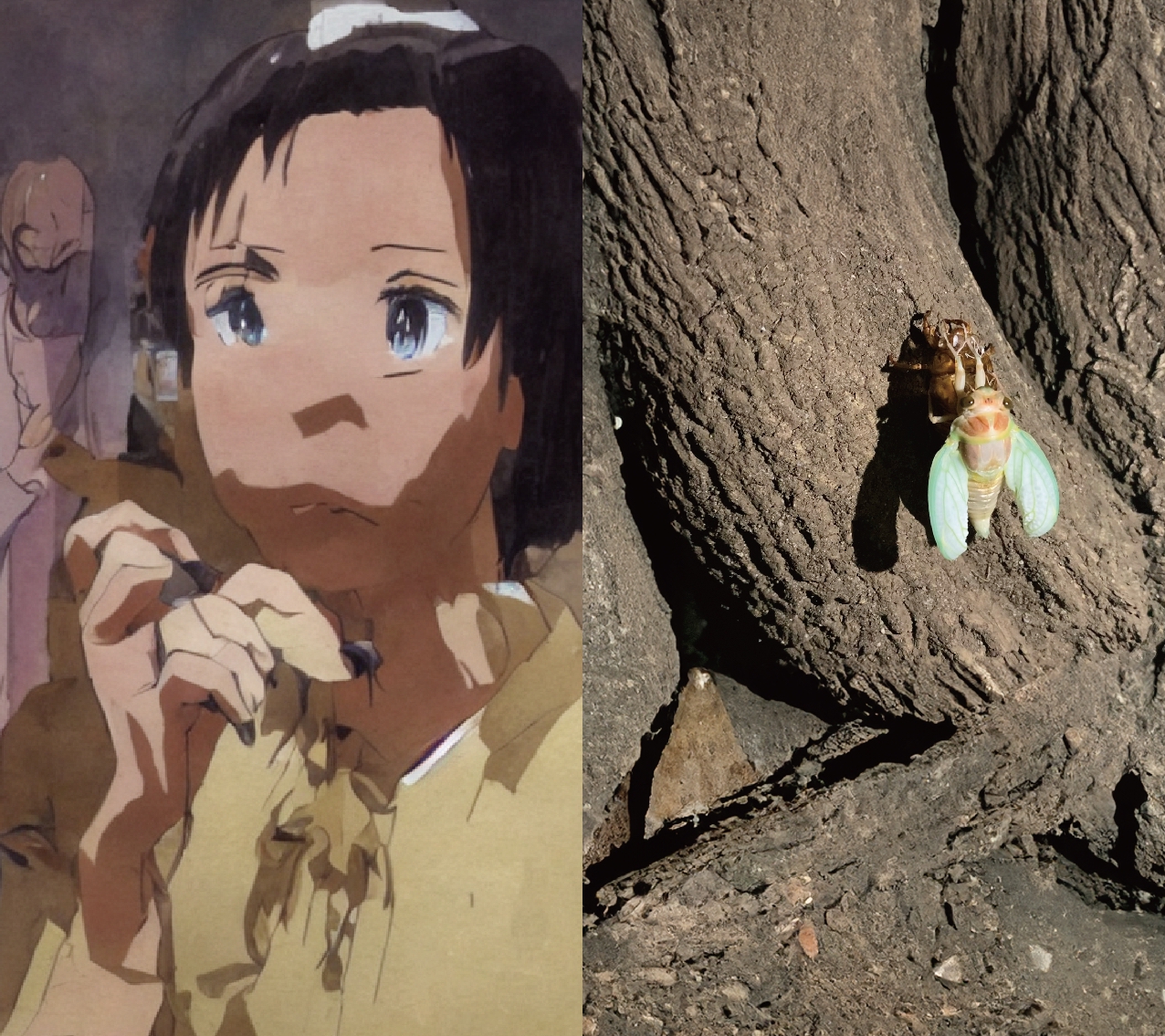
NATSUMI AOYAGI, still from Language for Our Relation: A Demonstration, 2025. 3-channel video (2 monitors and 1 tablet), color, sound, with dismantled wedding zabuton cushions, 4 min., 50 sec. Photo by Minji Yi. © Natsumi Aoyagi, courtesy The WilloW, Seoul.
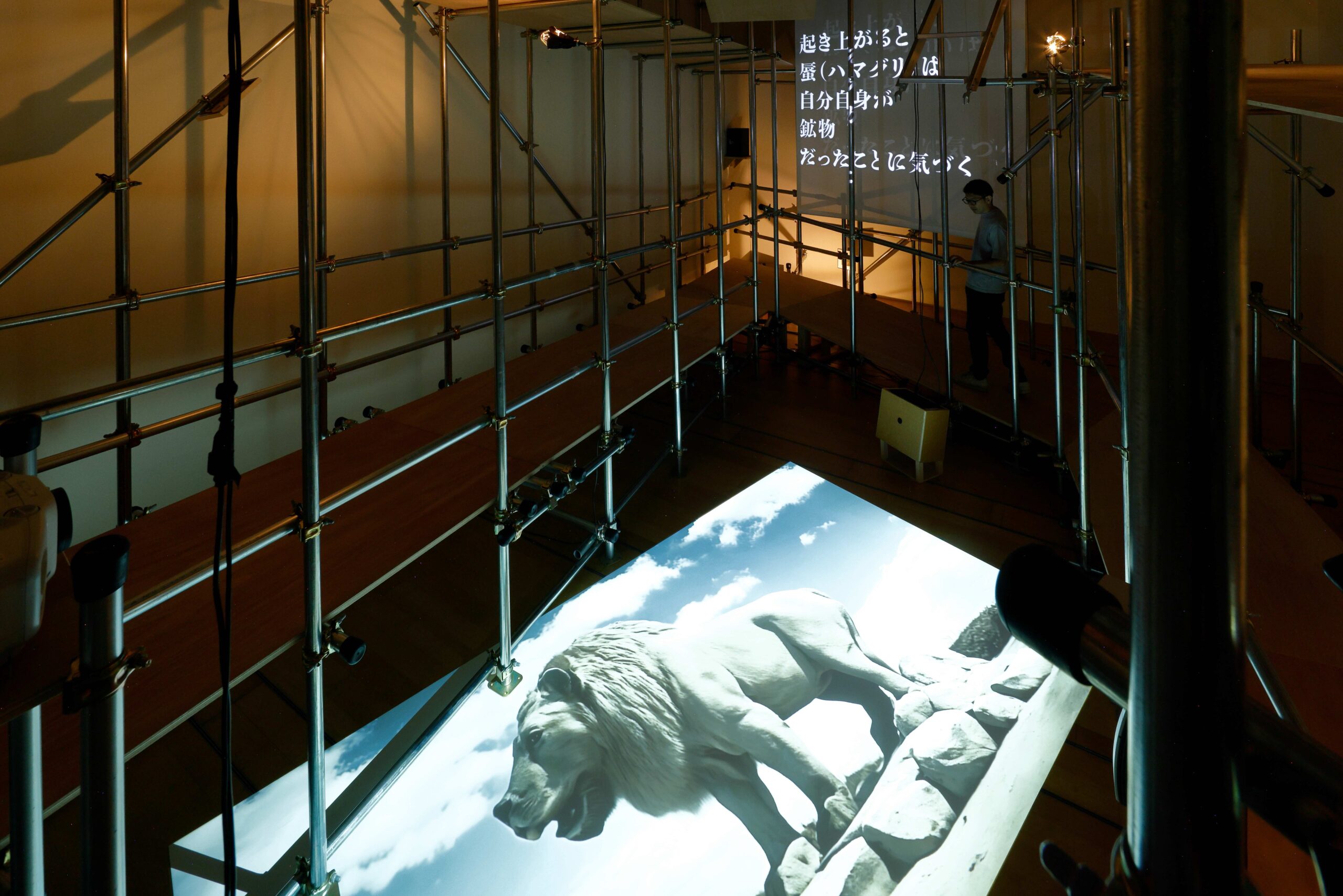
NATSUMI AOYAGI + MIYU HOSOI, Land Registry, 2024. Video and sound installation. Installation view, NTT InterCommunication Center, Tokyo, 2024. Photo by Keizo Kioku. © Natsumi Aoyagi + Miyu Hosoi, courtesy NTT InterCommunication Center, Tokyo.
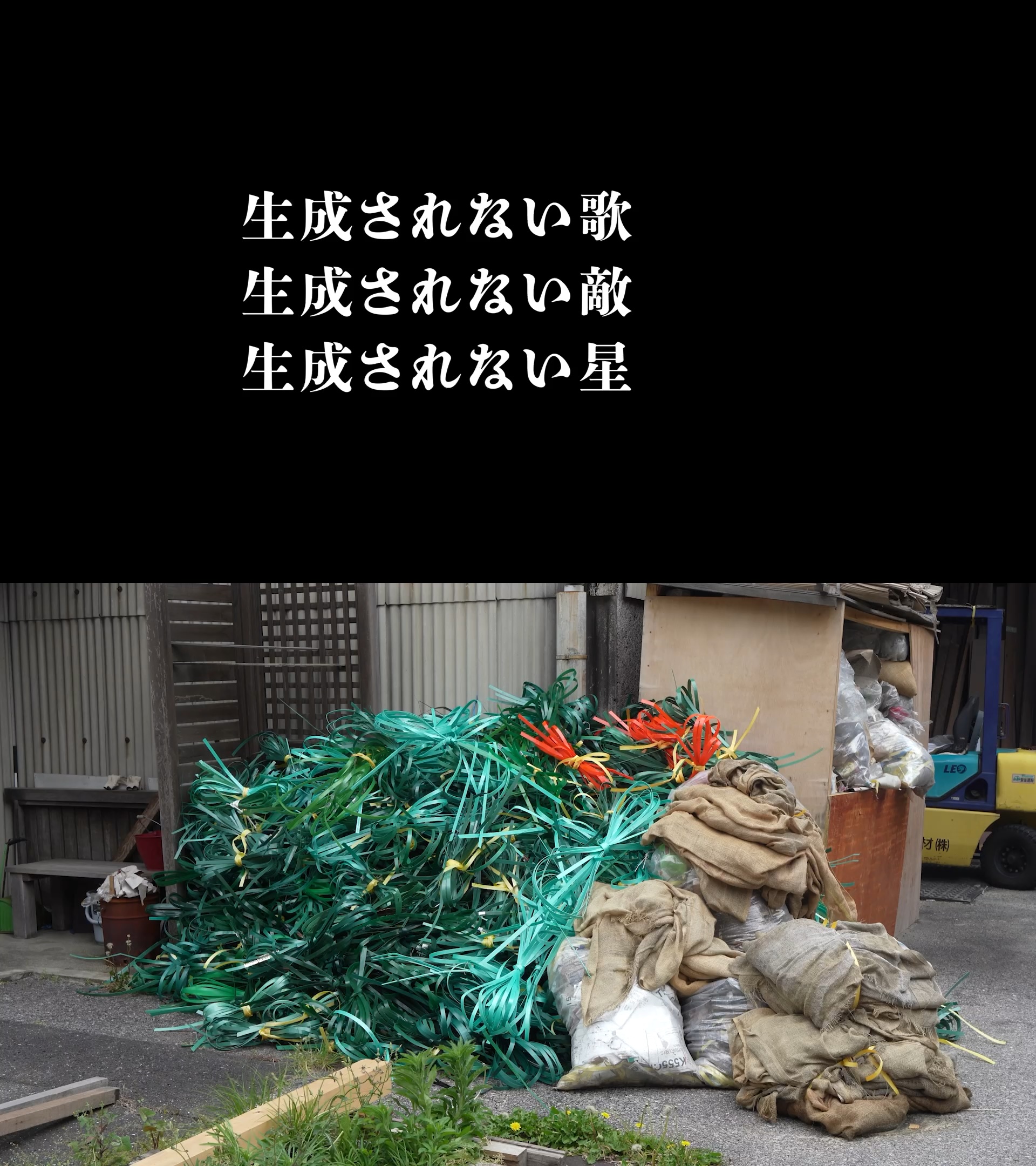
NATSUMI AOYAGI + MIYU HOSOI, still from Land Registry, 2024. Video and sound installation. © Natsumi Aoyagi + Miyu Hosoi, courtesy NTT InterCommunication Center, Tokyo.
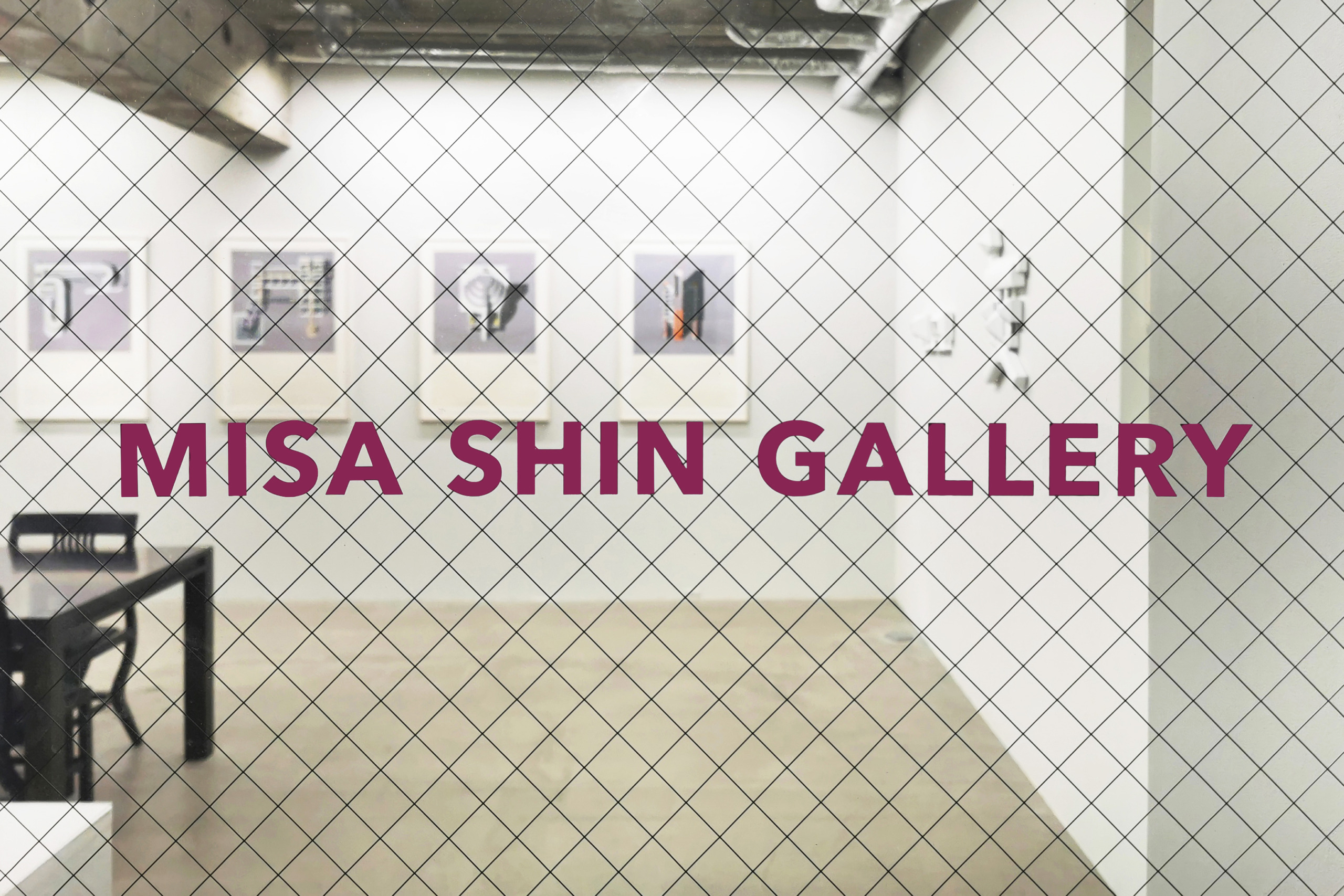
Misa Shin Gallery, Minami-Azabu
NATSUMI AOYAGI: POSSIBLE WORDS, POSSIBLE WORLD
Curated by
Jaemin Shin
Misa Shin Gallery
Korean independent curator Jaemin Shin guides this solo project by emerging artist and poet Natsumi Aoyagi (b. 1990, Tokyo), whose recent multimedia installations link macro-territory (filled-in land) with micro-social relationships (the family registry system) through the keywords “record” and “ownership.”
CURATORIAL STATEMENT
Artist and poet Natsumi Aoyagi reconstructs recorded narratives as a means of dismantling existing frameworks, opening new possibilities, and imagining alternative futures for society. Juxtaposing poems, moving images, AI-generated imagery, recorded sound, and fiction, the resulting works generate multilayered meanings shaped by a speculative imagination. This imagination becomes a tool for rethinking social relations and possible worlds, revealing the invisible structures embedded in systems that initially appear to be stable and self-evident.
“Possible Words, Possible World” focuses on Aoyagi’s multimedia installations Land Registry (2024) and Language for Our Relation: A Demonstration (2025), both of which examine histories, registries, and relations of ownership constructed through human records.
Aoyagi produced Land Registry in collaboration with sound artist Miyu Hosoi for an exhibition at the NTT InterCommunication Center in Tokyo. The work revisits the artificial islands of Tokyo Bay—territories without a natural history, whose existence begins instead with administrative records such as land registries. If the history of such land begins with human records, Land Registry asks whether the same logic of recording might also be used to imagine its distant past or coming future.
While Land Registry explores artificial land on a macro level, Language for Our Relation: A Demonstration operates on a more intimate scale, reimagining relations among and between humans and nonhuman entities beyond ownership and the family registry system. Based on Aoyagi’s eponymous short novel, the work proposes an imaginary “relation name” system under which such relationships are understood as fluid, temporary, and mutually formed. Incorporating moving images, two-dimensional works, and dismantled wedding zabuton cushions, the site-specific installation deconstructs conventional ideas of existence, naming, and belonging.
By bringing these works together, the exhibition links macro-territory (filled-in land) with micro-social relations (the family registry system) through the keywords “record” and “ownership.” At the same time, it reveals the capacity of poetic imagination to dismantle and reconstruct existing narratives into alternative futures, inviting viewers to reconsider how they perceive, relate to, and inhabit the world.
—Jaemin Shin
ABOUT THE CURATOR
Misa Shin Gallery
Misa Shin Gallery opened in 2010 in Shirokane, a central and historically industrial area of Tokyo that still contained small factories at the time. In 2018 the gallery relocated to Minami-Azabu, a quiet residential neighborhood that is also home to many embassies. The gallery represents a multigenerational roster of Japanese and international artists, many of whom work with conceptual and interdisciplinary approaches. The gallery seeks to both present exhibitions of cutting-edge work and establish the historical significance of its artists. In particular, the gallery’s representation of Japanese conceptual artists from the 1960s and ’70s has made lasting contributions to the global understanding and appreciation of postwar Japanese art.